Canada has four main fast-track hiring options for skilled professionals to fill 492,500 current job vacancies across in-demand sectors such as technology, engineering, healthcare, logistics, construction, finance, and skilled trades. According to official projections, these vacancies are expected to rise to over 8.1 million by 2033 and the government plans to add more fast-track hiring pathways due to ongoing labour shortages.
The Canadian government is planning to invest $1 trillion in infrastructure, clean energy, digital transformation, healthcare, housing, and advanced manufacturing. It has also committed $1.7 billion to attract global talent through initiatives such as the Canada Global Impact+ Research Talent Initiative, supporting research, innovation, and high-skilled workforce development. With these investments, Canada is increasingly relying on fast-track hiring and streamlined work visa pathways to attract skilled professionals and support sustained economic growth.
*Looking to work in Canada through fast-track hiring? Get expert guidance from Y-Axis.
List of Fast-Track Hiring Options in Canada for Skilled Professionals
Canada has fast-track hiring options to help employers recruit skilled professionals quickly for roles facing labour shortages. These pathways are designed to reduce processing times, prioritise in-demand occupations, and provide faster access to work permits for qualified candidates.
The main fast-track hiring options available in Canada for skilled professionals include the Global Skills Strategy (GSS), Express Entry Provincial Nominee Programs, and employer-sponsored work permits.
Main fast-track hiring pathways for skilled professionals include:
Global Skills Strategy (GSS)
The Global Skills Strategy (GSS) is one of Canada’s fastest hiring pathways, offering work permit processing in as little as two weeks for eligible high-skilled roles. It is mainly used for technology, engineering, and STEM occupations where employers need specialised expertise quickly. Through the Global Talent Stream (GTS), employers can recruit highly skilled professionals for critical roles that cannot be filled locally, significantly reducing hiring delays.
Express Entry
While Express Entry is commonly known as a skilled worker selection system, it also supports fast-track hiring for employers with long-term workforce needs. Skilled professionals with strong experience, education, and language ability are prioritised, especially in sectors such as technology, healthcare, engineering, and skilled trades. Employers use this pathway to access a large pool of qualified talent more efficiently than traditional recruitment methods.
Provincial Nominee Programs (PNPs)
Provincial Nominee Programs allow provinces and territories to recruit skilled professionals based on regional labour shortages. Many PNP streams are employer-driven or occupation-focused, making them effective fast-track hiring options for urgently needed roles. Provinces frequently target healthcare, construction, logistics, engineering, agriculture, and technology to fill vacancies faster and support regional workforce needs.
Employer-Sponsored Work Permit
An employer-sponsored work permit is one of the most direct fast-track hiring options in Canada. Under this pathway, a Canadian employer offers a job to a skilled professional and supports the work permit application. It is widely used across technology, healthcare, engineering, logistics, construction, manufacturing, and skilled trades, allowing employers to accelerate hiring and onboard talent quickly.
Benefits of Fast-Track Hiring Options in Canada for Skilled Professionals
Fast-track hiring options in Canada are designed to help skilled professionals move into in-demand roles more quickly while supporting employers facing urgent workforce gaps.
Key benefits for skilled professionals include:
- Faster work permit processing and shorter hiring timelines
- Priority consideration for high-demand occupations
- Access to employer-supported job opportunities
- Quicker onboarding into critical roles
- Opportunities across high-growth sectors
- More predictable and streamlined hiring processes
Eligibility Requirements for Fast-Track Hiring in Canada
Eligibility for fast-track hiring in Canada depends on the pathway and job role, but most options focus on skill readiness and the ability to meet urgent labour needs. Skilled professionals must demonstrate they can fill in-demand positions and comply with work permit requirements.
Key eligibility requirements include:
- Relevant work experience in a shortage occupation
- Qualifications that match the job role, especially for technical or regulated fields
- Strong English or French language ability for workplace communication
- A valid job offer for employer-driven or sponsored pathways (if required)
- Compliance with work permit conditions, including documentation, medical exams, biometrics, and background checks
Documents Required for Fast-Track Hiring in Canada for Skilled Professionals
Skilled professionals applying through fast-track hiring options must submit complete and accurate documents to avoid delays. Having all documents ready in advance helps employers move faster and supports quicker work permit processing.
Key required documents for fast-track hiring include:
- A valid passport
- Updated résumé or CV
- Job offer letter or employment contract (if applicable)
- Proof of relevant work experience
- Educational certificates and transcripts
- Language test results (if required)
- Medical examination report
- Police clearance certificate
Step-by-Step Application Process for Fast-Track Hiring in Canada
Step 1: Check your eligibility
Step 2: Gather all required documents
Step 3: Complete a language test (if required)
Step 4: Create an Express Entry profile (if applicable)
Step 5: Secure a job offer or provincial nomination
Step 6: Submit your work permit or visa application
Step 7: Wait for processing and plan your relocation
*Want to apply for fast-track work permit in Canada? Get expert guidance from Y-Axis.
Processing Times for Fast-Track Work Visas in Canada
Processing times for fast-track hiring in Canada vary depending on the pathway and job role. These options are designed to reduce delays and help skilled professionals begin working as quickly as possible, especially in high-demand sectors.
Estimated Processing Time for fast-track work permit:
|
Fast-track Pathway |
Average Processing Time |
|
Global Skills Strategy (GSS) |
2 weeks |
|
Employer-Sponsored Work Permit |
2–4 months |
|
Employer-Driven PNP Work Permit |
Vary by Province |
|
LMIA-Based Work Permit |
4–8 months |
Processing Costs for Fast-Track Work Permits in Canada
Fast-track hiring in Canada involves specific government fees related to work permit applications and required checks. While costs vary depending on the hiring pathway and individual circumstances, the fees below reflect the most common expenses skilled professionals and employers should expect when applying through fast-track work visa routes.
Estimated Processing Costs for fast-track work permit:
|
Category |
Processing Cost (CAD) |
|
Work Permit Application Fee |
$155 |
|
Open Work Permit Holder Fee |
$100 |
|
Biometrics Fee |
$85 per person |
|
LMIA Fee (Employer Cost, if required) |
$1,000 per position |
|
Medical Examination |
$150–$350 |
|
Police Clearance Certificate |
Varies by country |
|
Language Test (if required) |
$250–$350 |
|
Credential Assessment (if required) |
$200–$300 |
In-Demand Sectors with Fast-Track Hiring in Canada for Skilled Professionals
Canada’s fast-track hiring pathways focus on industries facing persistent labour shortages. Employers in these sectors actively recruit skilled professionals, leading to faster hiring timelines and priority processing through employer-led work permit routes.
Most in-demand sectors for skilled professionals include:
- Information Technology (IT)
- Healthcare and Social Services
- Engineering
- Skilled Trades and Construction
- Logistics and Transportation
- Renewable Energy and Sustainability
- Finance and Professional Services
- Education
- Hospitality and Tourism
Top 10 Companies Hiring for Skilled Workers in Canada
Many employers in Canada rely on fast-track hiring to fill critical roles quickly across healthcare, tech, logistics, engineering, and manufacturing. These organisations prioritise skilled workers who can join sooner because of ongoing labour shortages and project demands.
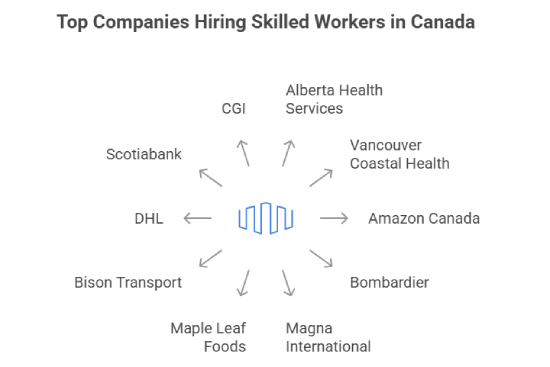
Some of the top 10 companies hiring for skilled workers include:
- Alberta Health Services
- Vancouver Coastal Health
- Amazon Canada
- Bombardier
- Magna International
- Maple Leaf Foods
- Bison Transport
- DHL
- Scotiabank
- CGI
Can I apply for fast-track hiring in Canada without a Job Offer?
Yes, you can apply for fast-track hiring in Canada without a job offer in certain cases. Some pathways, such as Express Entry, allow skilled professionals to be assessed based on work experience, education, and language ability without employer sponsorship. In addition, a few provinces run occupation-based or priority draws that do not always require a job offer.
However, most fast-track hiring options, including employer-sponsored work permits and the Global Skills Strategy, do require a valid job offer and usually offer faster hiring and processing timelines.
Can Fast-Track Hiring in Canada Lead to Permanent Residency?
Yes, fast-track hiring in Canada can support a pathway to permanent residency over time. Skilled professionals hired through employer-sponsored work permits, Express Entry–aligned roles, or provincial hiring programs often gain valuable Canadian work experience, which strengthens eligibility for long-term immigration options.
Working in an in-demand occupation improves profile strength, increases selection chances under skilled worker programs, and helps professionals transition from temporary work permits to permanent status once program requirements are met.
Tips to Improve Your Chances for Fast-Track Hiring in Canada
Skilled professionals can improve their chances of fast-track hiring in Canada by aligning their profile with employer needs and preparing early. Strong documentation and targeted applications help reduce delays and speed up hiring decisions.
Key tips to improve fast-track hiring chances include:
- Focus on occupations facing active labour shortages
- Improve English or French language test scores
- Secure a valid job offer from a Canadian employer
- Target employer-driven or fast-track work permit options
- Align your resume with Canadian hiring standards
- Prepare all documents early to avoid processing delays
*Planning your move to work in Canada? Get step by step assistance from Y-Axis professionals.
FAQs
What are fast-track hiring options in Canada for skilled professionals?
Fast-track hiring options in Canada are priority recruitment pathways that help employers hire skilled professionals faster for in-demand roles. These options reduce processing times and support quicker work permit approvals. Common fast-track routes include the Global Skills Strategy, employer-sponsored work permits, employer-driven Provincial Nominee Programs, and Express Entry–aligned hiring. For skilled professionals, fast-track hiring means faster job placement and quicker entry into the workforce.
Who is eligible for fast-track hiring in Canada?
Eligibility for fast-track hiring in Canada depends on the pathway and job role. Skilled professionals generally need relevant work experience in an in-demand occupation, job-related qualifications, and English or French language ability. Some fast-track options require a valid job offer, especially employer-sponsored and employer-driven provincial pathways. Applicants must also meet work permit requirements, including documentation, medical exams, biometrics, and background checks.
Can I apply for fast-track hiring in Canada without a job offer?
Yes, some fast-track hiring options allow applications without a job offer. Express Entry assesses skilled professionals based on work experience, education, and language ability without employer sponsorship. Some provinces also conduct occupation-based or priority draws without job offers. However, most fast-track hiring routes, including employer-sponsored work permits and the Global Skills Strategy, require a valid job offer and usually offer faster processing.
Which sectors use fast-track hiring the most in Canada?
Fast-track hiring in Canada is most common in sectors facing labour shortages. These include information technology, healthcare, engineering, skilled trades, construction, logistics, renewable energy, finance, education, and hospitality. Employers in these industries rely on fast-track hiring options to fill urgent roles quickly, while skilled professionals benefit from priority processing and faster work permit approvals.
What is the Global Skills Strategy and how fast is it?
The Global Skills Strategy is one of Canada’s fastest hiring pathways, offering work permit processing in as little as two weeks for eligible high-skilled roles. It is mainly used for technology, engineering, and STEM occupations. Through the Global Talent Stream, employers can quickly hire specialised professionals for critical positions that cannot be filled locally, significantly reducing hiring delays.
How do Provincial Nominee Programs support fast-track hiring?
Provincial Nominee Programs support fast-track hiring by allowing provinces to select skilled professionals who meet regional labour market needs. Many PNP streams are employer-driven or occupation-focused, helping employers fill urgent vacancies faster. Provinces commonly target healthcare, engineering, construction, logistics, agriculture, and technology roles, making PNPs an effective fast-track hiring option.
Do Canadian employers sponsor work visas under fast-track hiring?
Yes, many Canadian employers sponsor work visas under fast-track hiring options. Employer-sponsored work permits are widely used in technology, healthcare, engineering, logistics, construction, manufacturing, and skilled trades. With a valid job offer, employers can support faster work permit processing through LMIA-based or LMIA-exempt routes, making sponsorship one of the most direct fast-track hiring methods.
How long does fast-track hiring take in Canada?
Fast-track hiring timelines vary by pathway. The Global Skills Strategy can process work permits in about two weeks. Employer-sponsored work permits usually take two to four months, while LMIA-based permits may take four to eight months. Provincial pathways vary by region. Overall, fast-track hiring significantly reduces waiting times compared to standard work permit routes.
What documents are required for fast-track hiring in Canada?
Fast-track hiring in Canada typically requires a valid passport, updated résumé, job offer letter if applicable, proof of work experience, educational certificates, language test results when required, medical exam reports, and police clearance certificates. Submitting complete and accurate documents helps avoid delays and speeds up work permit processing.
Can fast-track hiring in Canada lead to permanent residency?
Yes, fast-track hiring in Canada can support permanent residency over time. Skilled professionals who gain Canadian work experience through employer-sponsored roles, Express Entry–aligned jobs, or provincial hiring programs often strengthen their eligibility for long-term settlement. Working in in-demand occupations improves profile strength and selection chances under skilled worker immigration pathways.