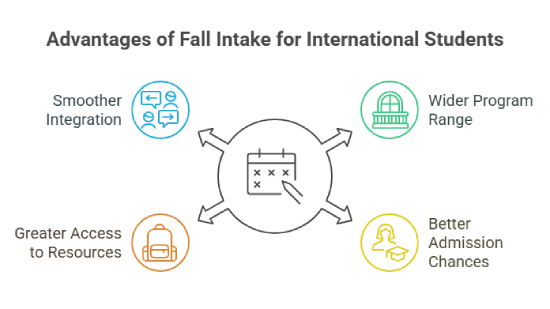
The fall intake (September) is the best time to study in Canada for most international students. It offers the widest selection of programs across recognised universities, along with better access to scholarships, internships, and part-time work opportunities. As this is the main academic intake, institutions open full admissions, giving students stronger chances of securing seats in competitive courses.
If you miss Fall deadlines, the Winter intake (January) is a good alternative with fewer programs and lower competition. The Summer intake (May) is mainly suitable for short-term or specialised courses.
Canada is expected to issue 408,000 study permits in 2026, including 155,000 for new international students, creating strong study opportunities.
*Want to study in Canada? Let Y-Axis help you through application process.
What are the main intakes in Canada for International Students?
Canada offers three main study intakes for international students: Fall, Winter, and Summer. Each intake varies in start dates, program availability, and competition levels, allowing students to choose the most suitable option based on their academic plans and readiness.
- Fall Intake (September): The primary and most preferred intake, offering the widest range of undergraduate and postgraduate programs. It also provides better access to scholarships, internships, and full campus facilities.
- Winter Intake (January): A secondary option for students who miss the Fall intake or need additional preparation time. It offers fewer program choices but lower competition.
- Summer Intake (May): This is a limited intake mainly available for short-term, diploma, or specialised courses. It is suitable for students seeking flexible entry or specific program options.
Why Fall Intake Is the Top Choice for International Students?
The Fall intake (September) is the most preferred option for international students because it offers the widest range of programs across Canadian universities. Most institutions open full admissions during this period, giving students better chances of securing seats in competitive courses.
This intake also provides greater access to scholarships, internships, part-time jobs, and campus facilities. Since it marks the beginning of the academic year, students benefit from complete academic support, orientation programs, and smoother integration into campus life.
With higher program availability and stronger career opportunities, the Fall intake remains the top choice for international students planning to study in Canada.
How to Select the Right Intake in Canada for International Students?
To choose the right intake for studying in Canada, students should consider their preferred start date, course availability, level of competition, and how prepared they are to apply. The Fall intake is ideal for those seeking maximum program options and scholarships, while the Winter intake suits students who need more preparation time or miss Fall deadlines. The Summer intake is best for short-term or specialised courses.
|
Intake |
Course Availability |
Competition |
Chances of Admission |
|
Fall (September) |
Very High |
High |
Competitive |
|
Winter (January) |
Medium |
Balanced |
Good |
|
Summer (May) |
Limited |
Low |
Higher for eligible courses |
Eligibility Requirements for International Students to Study in Canada
To study in Canada, international students must meet certain basic eligibility criteria set by Canadian institutions and immigration authorities. These requirements ensure students are academically prepared and financially capable of pursuing their studies.
Key eligibility requirements include:
- Completion of required academic qualifications for the chosen program
- Proof of English language proficiency (IELTS, TOEFL, or equivalent)
- A valid offer letter from a recognised Canadian institution
- Proof of sufficient funds to cover tuition fees and living expenses
- A valid passport and clean medical records
- Meeting Canada study permit and visa requirements
Documents Required to Study in Canada for International Students
International students must submit a set of mandatory documents as part of the university admission and study permit process. Having these documents ready in advance helps avoid delays and ensures a smooth application experience:
- Valid Passport
- Letter of Acceptance (LOA)
- Proof of Funds
- Academic Transcripts
- Language Test Scores
- Statement of Purpose (SOP)
- Study Permit Application
- Photographs
- Medical Examination Report
- Police Clearance Certificate
- Tuition Fee Payment Receipt
How to apply for the right Intake in Canada as an International Student?
International students planning to study in Canada should follow a clear application process to select the right intake and secure admission. Understanding each step helps avoid delays, meet deadlines, and improve your chances of getting accepted into your preferred Canadian institution.
Steps to apply for Study Intakes in Canada:
Step 1: Select your course and preferred Canadian university
Step 2: Check which intake your chosen program is offered in
Step 3: Review application deadlines and intake timelines
Step 4: Prepare required documents such as academic transcripts, SOP, and English test scores
Step 5: Submit your application through the official university portal
Step 6: Receive your offer letter
Step 7: Apply for the Canada study permit
*Want to apply for Canadian universities? Consult Y-Axis for expert guidance.
Best Courses to Study in Canada for International Students
Canada offers a wide range of career-oriented programs that attract international students from around the world. These courses are aligned with industry demand and provide strong employment opportunities after graduation.
Some of the most popular courses include:
- Business and Management
- Engineering (Civil, Mechanical, Electrical)
- Computer Science and Information Technology
- Data Science and Artificial Intelligence
- Healthcare and Nursing
- Finance and Accounting
- Hospitality and Tourism Management
- Environmental Science and Sustainability
- Biotechnology
- Supply Chain and Logistics Management
Which Intake offers more Scholarships in Canada for International Students?
The Fall intake is the best option for international students seeking scholarships in Canada. Most universities release a majority of their funding opportunities during this intake, including merit-based, need-based, and university-specific scholarships.
Students applying in the Fall intake benefit from higher availability of financial aid and a wider selection of programs. As this is the main admission period, institutions allocate larger scholarship budgets, increasing the chances of securing financial support. Applying early within the Fall intake further improves your eligibility for scholarships and competitive grants.
Also Read…
Top 10 scholarships in Canada for International Students
Top Canadian Universities Fall and Winter Intakes for International Students
Many leading universities in Canada offer both Fall (September) and Winter (January) intakes, giving international students flexible entry options. The Fall intake has the widest choice of programmes, while the Winter intake suits students who need a later start.
List of top Canadian universities for fall and winter intakes:
- University of Toronto
- University of British Columbia
- McGill University
- University of Alberta
- University of Waterloo
- McMaster University
- Western University
- Queen’s University
Can International Students Work While Studying in Canada?
Yes, international students can work while studying, provided they meet study permit conditions. Most students are allowed to work part-time during academic sessions and full-time during scheduled breaks, helping them manage living expenses and gain local work experience.
Tips for International Students Planning to Study in Canada
Planning ahead makes studying in Canada smoother and less stressful for international students. Early preparation helps you meet deadlines, manage costs, and settle quickly into academic life.
- Apply early to secure your preferred intake and programme
- Choose the intake that matches course availability and deadlines
- Prepare finances in advance to meet tuition and living cost requirements
- Keep all academic and visa documents accurate and up to date
- Check work rules and part-time work eligibility
- Arrange accommodation before arrival
- Understand post-study work and career pathways early
*Planning to study in Canada? Get expert guidance and end-to-end visa support from Y-Axis.
FAQs
Which intake is the best to study in Canada for international students?
The Fall intake is the best to study in Canada for most international students because it offers the widest selection of programs and higher admission capacity across top universities. Compared to other intakes in Canada for international students, the Fall intake provides better access to scholarships, internships, and part-time work opportunities. Students searching for which intake is best in Canada usually prefer Fall as it aligns with the main academic year and improves career exposure. This study intake in Canada also increases the chances of securing seats in competitive courses, making it the most preferred choice for international applicants.
How many intakes are there in Canada for international students?
There are three main intakes in Canada for international students: Fall, Winter, and Summer. These different intakes in Canada allow students to begin their studies at different times of the year based on course availability and readiness. The Fall intake in Canada is the most popular, followed by Winter and Summer. Understanding how many intakes in Canada universities offer helps students plan effectively and decide which intake is the best to study in Canada. Each study intake in Canada has its own deadlines, program options, and competition levels.
What are the three intakes in Canada and when do they start?
The three intakes in Canada are Fall, Winter, and Summer. The Fall intake begins in September and offers the maximum number of programs. The Winter intake starts in January and is ideal for students who miss the Fall deadlines. The Summer intake starts in May and mainly caters to short-term or specialised courses. These Canada study intakes for international students differ in availability and competition. Knowing when are the intakes in Canada helps students choose the best intake to study in Canada based on program options and application timelines.
Why is the Fall intake considered the best intake in Canada?
The Fall intake in Canada is considered the best because it provides the widest program availability and full participation from universities and colleges. It also offers better scholarship opportunities and access to internships. Most students searching which intake is the best to study in Canada choose Fall because it increases admission chances for competitive courses. Compared to other intakes in Canada for international students, Fall ensures stronger academic exposure, career opportunities, and alignment with the global academic calendar, making it the most reliable study intake in Canada.
Is the Winter intake in Canada a good option for students?
Yes, the Winter intake in Canada is a good option for students who miss the Fall intake or need extra time to prepare. While it offers fewer programs, it comes with reduced competition. This study intake in Canada suits students who want to start their studies without waiting for the next academic year. Among the different intakes in Canada, Winter provides a balanced entry point. Although it is not the best intake to study in Canada, it remains a practical alternative for international students.
Is the Summer intake suitable for international students in Canada?
The Summer intake in Canada is suitable mainly for students pursuing short-term, diploma, or specialised programs. It offers limited program options compared to Fall and Winter intakes in Canada for international students. While it is not considered the best intake to study in Canada, it is ideal for those seeking flexible entry or niche academic pathways. Students should carefully review program availability before choosing this study intake in Canada. It works best for specific disciplines and accelerated courses.
Which intake is best in Canada for scholarships?
The Fall intake is the best intake in Canada for scholarships as most universities release the majority of funding opportunities during this period. Students applying through Fall benefit from higher access to merit-based and institutional scholarships. Compared to Winter and Summer intakes in Canada for international students, Fall provides stronger financial support options. International students searching which intake is the best to study in Canada prefer Fall for its greater scholarship availability and improved chances of financial assistance.
When should international students apply for Canada intakes?
International students should apply at least 8 to 12 months before their preferred study intake in Canada. For the Fall intake, application deadlines typically fall between December and March. Understanding when are the intakes in Canada helps students plan effectively. Early submission improves chances of admission and visa approval. Planning ahead for intakes in Canada for international students increases the possibility of securing scholarships and preferred programs. Timely application is essential when selecting which intake is the best to study in Canada.
Which intake is best in Canada for course availability?
The Fall intake is the best intake in Canada for course availability as it offers the highest number of undergraduate and postgraduate programs. Most universities introduce new courses and open full admissions during this period. Compared to other study intakes in Canada, Fall provides wider choices and better flexibility. Students looking for specialised or competitive programs prefer this intake. When considering which intake is the best to study in Canada, Fall remains the top option for broad academic access.
How do I choose the right intake in Canada for my study plans?
To choose the right study intake in Canada, consider your academic readiness, course availability, financial planning, and visa timelines. The Fall intake is the best to study in Canada for most students, while Winter and Summer offer alternative entry points. Understanding different intakes in Canada for international students helps align your goals with application deadlines. Planning carefully ensures you select the best intake in Canada to meet your academic and career objectives.